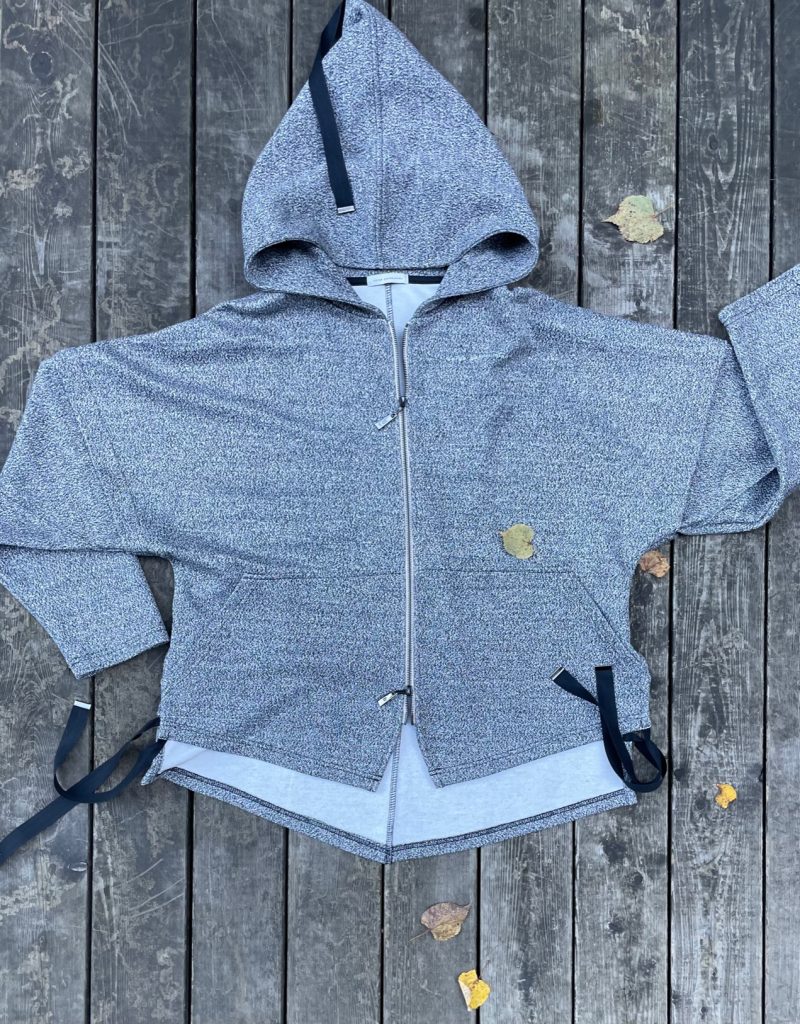
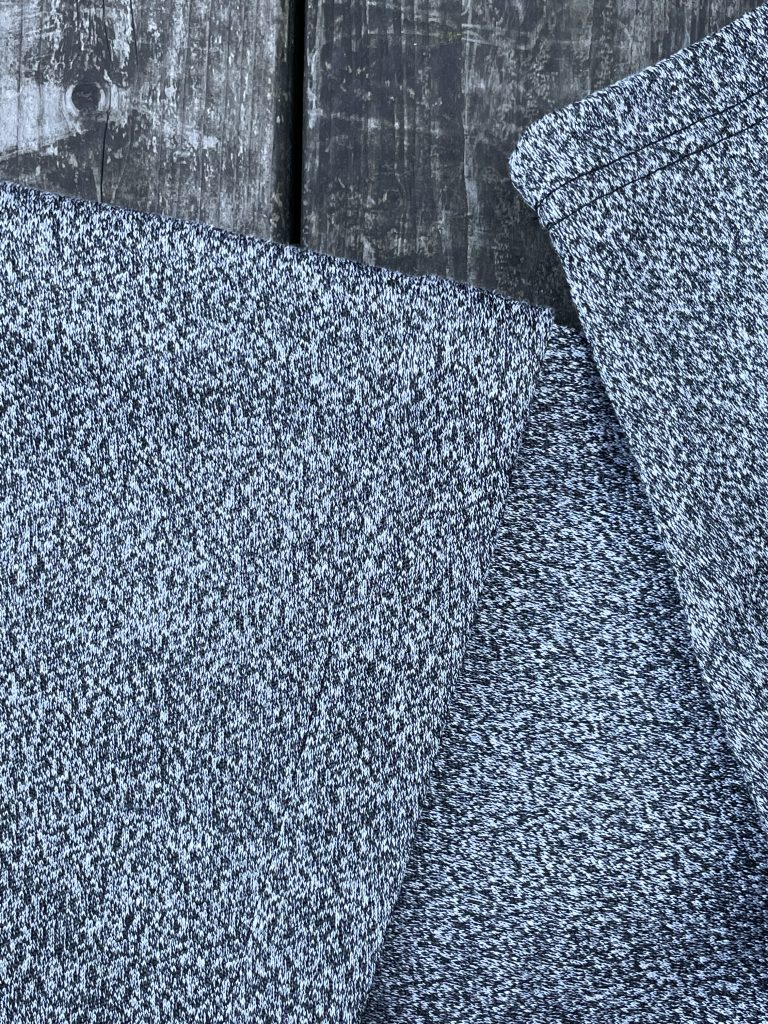
Sudėtis:
Polilaktidas (PLA) 48 %, kanapė 37 %, viskozė 15 %
Polilaktidas (PLA), kitaip kukurūzų pluoštas, yra vienintelis sintetinis pluoštas, pramoniniu būdu gaminamas iš greitai atsinaujinančių gamtinių šaltinių (kukurūzų pasėlių), o ne iš naftos, poliesterio pakaitalas.
Savybės: nesukelia alergijų, nesielektrina, greitai džiūsta, atsparus UV spinduliams, nepalaiko bakterijų dauginimosi.
Bioskaidus.
Perdirbamas.
PLA pluošto gamybos metu sunaudojama apie 50% mažiau energijos, 80% mažesnė CO2 emisija nei gaminant tradicinius sintetinius pluoštus.
Medžiagos kilmės šalis: Vokietija
Gamtinė kanapė – tai ekologiškiausias bioskaidus pluoštas, kurio auginimui nereikia herbicidų ir pesticidų, sunaudojama dvigubai mažiau vandens nei medvilnei, nebūtina auginimo rotacija, kanapių pasėliai efektyviai mažina CO2 emisiją atmosferoje.
Savybės: ilgaamžis, stiprus audinys, atsparus aplinkos poveikiams šalčiui, karščiui, drėgmei, pelėsiams bei kandims, hidrofiliškas, atsparus UV spinduliams, pasižymi antibakterinėmis, antialerginėmis, antistatinėms savybėmis, termoreguliacija (natūraliai šildo šaltyje bei vėsina esant karštam orui, greitai išgarina sukauptą drėgmę, leidžia odai kvėpuoti), neabsorbuoja įvairių nemalonių kvapų.
Bioskaidi.
Perdirbama.
Medžiagos kilmės šalis: Italija
Viskozė – tai bioskaidus hidroceliuliozinis pluoštas, gaminamas iš medienos.
Savybės: lengvas ir minkštas, „kvėpuojantis“ audinys, efektyviai sugeria ir išgarina drėgmę (prakaitą), suteikia vėsumo pojūtį, nesielektrina, yra atsparesnis mikroorganizmams už medvilnę.
Gamintojo „Lenzing AG“ tradicinio viskozės pluošto, pagaminto iš natūralios gamtinės žaliavos – medienos, tvarumas yra patvirtintas “USDA Certified Biobased Product” sertifikatu pagal „BioPreferred®“ programą, o jo biologinis skaidumas įvairiose aplinkose įvertintas Belgijos „Organic Waste Systems (OWS)“ laboratorijoje ir patvirtintas techninės priežiūros asociacijos „TÜV Austria” išduotu sertifikatu.
Bioskaidi.
Perdirbama.
Medžiagos kilmės šalis: Austrija
Dizainas: Serge Gandžumian
Pagaminta Lietuvoje.

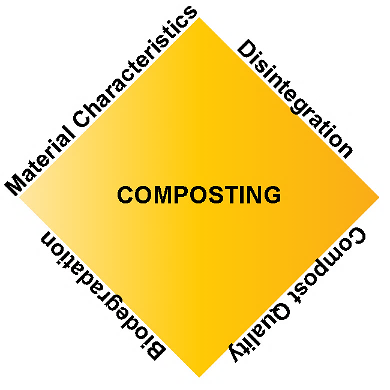
Regulatory guidelines and standards for composting revolve around four basic criteria: Material Characteristics, Biodegradation, Disintegration, and Ecotoxicity (Compost Quality). Description of the requirements of these testing can be found in the appropriate geographical area: DIN V 54900-1 (Germany), EN-13432 (EU), ASTM 6400-04 (USA), GreenPla (Japan).

All required testing data for Ingeo biopolymer was presented to DIN CERTCO for certification of suitability as a compostable material for packaging purposes in Europe. Ingeo passed all required testing according to EN-13432 and received registration from DIN CERTCO. For more information on compostability and specific Ingeo grades, see our Regulatory Affairs information.
All required testing data for Ingeo biopolymer was presented to the Japan BioPlastics Association (JBPA) for certification according to the GreenPla certification requirements. We received listing on JBPA's positive list for compostable materials. This list can be viewed at on JBPA's site in positive list, class A-resins (A40101-A40104).
All required testing data for Ingeo biopolymer was presented to the Biodegradable Products Institute (BPI) for certification according to ASTM 6400 Standard Specification for Labeling of Plastics Designed to be Aerobically Composted in Municipal or Industrial Facilities. Ingeo passed all required testing according to ASTM D6400 and received certification from BPI. For more information on compostability and specific Ingeo grades, see our Regulatory Affairs information.
| Certificate / Registration Holder: | NatureWorks LLC 17400 Medina Rd., Suite 800 55447 Plymouth United States Email: rebecca_brooks@natureworksllc.com |
| Product: | Compostable material for industrial composting |
| Type / Model: | NatureWorks PLA |
| Testing Basis: | Certification scheme Products made of compostable materials (DIN-Geprüft) (as of 2017-10) DIN EN 13432:2000-12 DIN EN 14995:2007-03 ISO 17088:2012 |
| Mark of Conformity: | ![]() |
| Registration Number: | 9K0033 |
| Valid until: | 2024-03-31 |
| Technical Data: | Resin, uncoloured |
Lenzing was the very first fiber producer worldwide to be awarded the EU Ecolabel for textile products in 2002.
The EU Ecolabel – initiated by the European Commission – is an environmental quality seal for the labelling of products and services which show a lower environmental impact and health burden over their entire life cycle that comparable substitute goods.
The formulation of criteria for awarding the EU Ecolabel takes place through independent experts, scientists and NGOs in cooperation with the EU member states. The criteria are determined on a scientific basis.
Lenzing is obliged to fulfil strict criteria for the EU-Ecolabel. This relates to both greenhouse gas emissions as well as water emissions and its dealing with chemicals. In addition, various aspects of the life cycle analysis are also taken into consideration.
Lyocell, modal and viscose fibers from Lenzing are available with the “flower logo”. They were examined by independent experts to ensure conformity with the stringent environmental and performance criteria.
Biobased products are created on the basis of renewable resources such as materials from agriculture, the sea and the forests, and offer an alternative to products on a crude oil basis. The certification of biobased products is part of the BioPreferred program of the U.S. Department of Agriculture. It is designed to encourage government institutions and companies to purchase products which are biobased or consist of biological materials for the most part. All Lenzing standard fibers contain 100 percent USDA certified biobased content by weight.
The Belgian certification company Organic Waste Systems (OWS) and TÜV AUSTRIA confirmed the biodegradability of Lenzing’s cellulose fibers according to international standards. The program encompasses tests for biodegradability (chemical decomposition), ecotoxicity and harmful substances (e.g. heavy metals). This means that Lenzing fibers are biodegradable in the ground as well as in sea water and are compostable both on an industrial basis and in the household.
Lenzing relies on responsible forestry. FSC® (FSC-C041246) and PEFC (PEFC/06-33-92) certifications ensure that the wood for fibers from Lenzing is derived from sustainable sources.
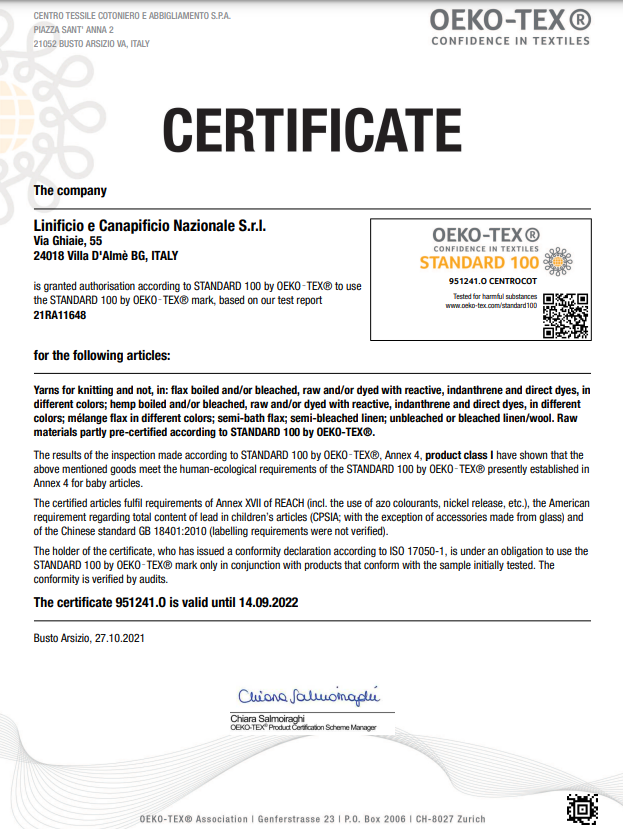
This worldwide standard ensures that about 1,000 chemicals are either not used at all or that the residues are within very tight limits in the textile production. STANDARD 100 by OEKO-TEX® is one of the world’s best-known labels for textiles tested for harmful substances. It stands for customer confidence and high product safety. Our registration number is 74683; the validity of our certificate can be checked by entering this number under https://www.oeko-tex.com/en/label-check.
OEKO-TEX® Label Check
The certificate is valid
STANDARD 100 by OEKO-TEX®
Certified according to annex 6
Product class: I
Type of certified article:
Wood based cellulosic fiber: LENZING™ Lyocell, LENZING™ Lyocell LF, LENZING™ Lyocell Micro, LENZING™ Lyocell Micro LF, LENZING™ Lyocell Skin, LENZING™ Lyocell Fine Skin, LENZING™ Lyocell Powder, LENZING™ Lyocell Shortcut, LENZING™ Lyocell Fine Shortcut, LENZING™ Lyocell Fill, LENZING™ Lyocell Release, LENZING™ Lyocell RB, LENZING™ Lyocell RB LF, LENZING™ Lyocell Dry, LENZING™ Modal, LENZING™ Modal Black, LENZING™ Modal Color, LENZING™ Modal Micro, LENZING™ Modal Micro Air, LENZING™ Modal Eco Clean , LENZING™ Modal Eco Clean Micro, LENZING™ Modal Pro, LENZING™ Modal Color Indigo, LENZING™ Viscose, LENZING™ Viscose Color, LENZING™ Viscose Black, LENZING™ Viscose Eco, LENZING™ Viscose Pro, LENZING™ Viscostar, LENZING™ Viscose EV, LENZING™ Viscose EV color/black, LENZING™ FR and LENZING™ FR Color (flame-retardant accepted by OEKO-TEX®) and LENZING™ FR Black
Doesn’t shrink after many washing and drying cycles and retain soft wool-like handle.
Retains the appearance after repeated washes.
Organic cotton is naturally cultivated cotton without the use of any synthetic agricultural chemicals such as fertilizers or pesticides or transgenic technology.
• Uses 91% less water.
• 46% fewer greenhouse gas emissions since the soil isn’t loaded with pesticides and can actually absorb CO2 from the atmosphere.
• 26% lower soil erosion
• 98% reduction of water pollution since synthetic chemicals aren’t used.
• 95% of water used to grow cotton is rain or ground water.
• 7502 liters of water saved for the average sized t-shirt.
It’s natural, breathable, and resilient, and has good insulation and thermo-regulating properties. It reacts to changes in body temperature to keep the wearer warmer when it is cold and cooler when it is warm. Wool is also odor- and wrinkle-resistant, which means that woolen clothing doesn’t need to be washed as often as other fiber types, saving water and energy.
Recycled polyester, also known as rPET, is obtained by melting down existing plastic and re-spinning it into new polyester fiber.
– 32% fewer greenhouse gas emissions.
– Prevents non-biodegradable plastics from being buried, burnt, or being swept into the sea.
– Requires 59% less energy to make.