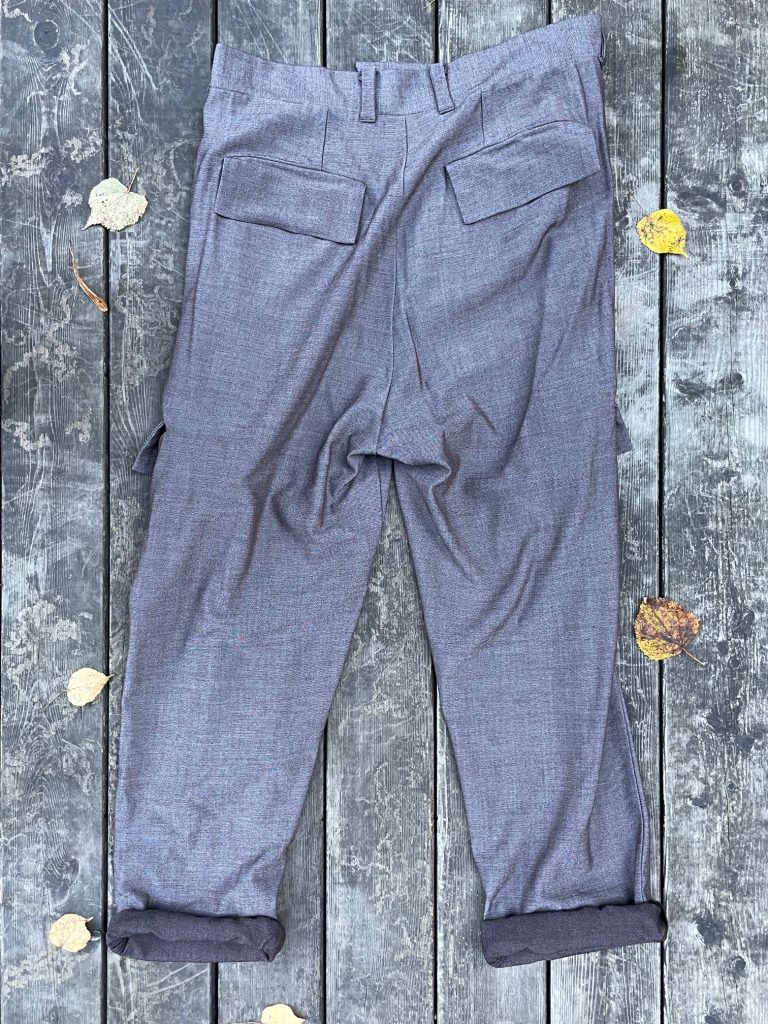
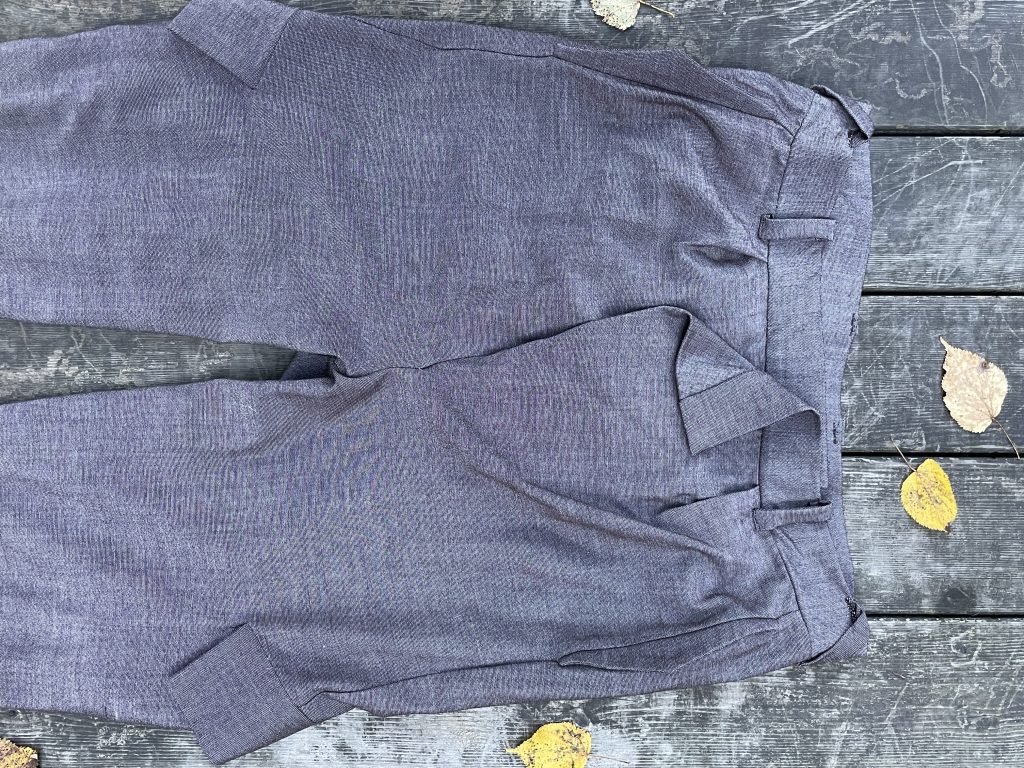
Sudėtis: Merino vilna 80 %, polilaktidas (PLA) – 22 %
Merino vilnos pluoštas – tai natūralus, bioskaidus, baltyminės kilmės pluoštas, gaunamas iš merinosų veislės avių kailio.
Savybės. Vilnos sudėtyje yra natūralaus riebalo lanolino, pluoštui suteikiančio antibakterines savybes. Šis pluoštas geba sugerti iki 33% vandens garų, nesukeliant drėgmės pojūčio, yra elastingas, be galo švelnus ir minkštas, pasižymi geromis termoreguliacinėmis savybėmis ir laidumu orui, todėl vilnos gaminiai dėvimi vasarą ir žiemą, jie leidžia odai kvėpuoti, nedirgina jautrios odos, mažai glamžosi, gerai išlaiko formą.
Gaminiui sukurti panaudota italų gamintojo „Filatura Pettinata Luisa 1966 s.r.l.“ ekologiškai tvaraus plonos merino vilnos pluošto verpalai, turintys NATIVA ™ etaloninį prekinį ženklą, taip pat atsakingos vilnos gamybos (RWS – Responsible Wool Standard) ir tarptautinio ekologiškos tekstilės (GOTS – Global Organic Textile Standard) standartų sertifikatus.
Vilnos pluošto cheminiam modifikavimui pasirinktas gamintojo Textilcolor AG (Šveicarija) organinio sulfito produktas Sevofixan PG.
Bioskaidi.
Perdirbama.
Medžiagos kilmės šalis: Italija
Polilaktidas (PLA), kitaip kukurūzų pluoštas, yra vienintelis sintetinis pluoštas, pramoniniu būdu gaminamas iš greitai atsinaujinančių gamtinių šaltinių (kukurūzų pasėlių), o ne iš naftos, poliesterio pakaitalas.
Savybės: nesukelia alergijų, nesielektrina, greitai džiūsta, atsparus UV spinduliams, nepalaiko bakterijų dauginimosi.
Bioskaidus.
Perdirbamas.
PLA pluošto gamybos metu sunaudojama apie 50% mažiau energijos, 80% mažesnė CO2 emisija nei gaminant tradicinius sintetinius pluoštus.
Medžiagos kilmės šalis: Vokietija
Dizainas: Serge Gandžumian
Pagaminta: Lietuva.
FILATURA PETTINATA LUISA 1966 SRL
General Data
|
Country |
Italy (IT) |
|
Field of operation |
Dyeing, Spinning, Finishing, Processing (other) |
|
Specification of operation |
Spinning (PR0027), Preparatory (PR0022), Dyeing (PR0008)*, Finishing (PR0012)* |
|
Product category |
Yarns |
Contact Data
|
Contact name |
Laura Mauri |
|
Telephone |
+39-015-9871731 |
|
Email address |
|
|
Street |
Via 2 giugno, 42 |
|
Postcode, City |
13866, Masserano (BI) |
|
Website |
License Data
|
License number |
GO0625 |
Other Data
|
Product details |
Dyed yarns (PC0029) |
|
Certification Body |
ICEA Istituto per la Certificazione Etica e Ambientale |
|
Certificate valid until |
2023-08-07 |


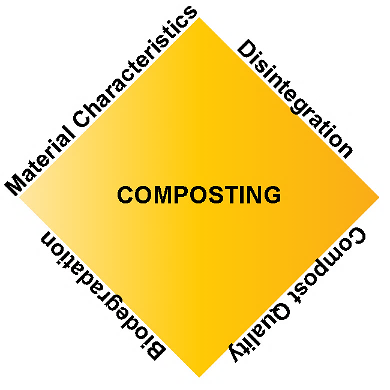
Regulatory guidelines and standards for composting revolve around four basic criteria: Material Characteristics, Biodegradation, Disintegration, and Ecotoxicity (Compost Quality). Description of the requirements of these testing can be found in the appropriate geographical area: DIN V 54900-1 (Germany), EN-13432 (EU), ASTM 6400-04 (USA), GreenPla (Japan).

All required testing data for Ingeo biopolymer was presented to DIN CERTCO for certification of suitability as a compostable material for packaging purposes in Europe. Ingeo passed all required testing according to EN-13432 and received registration from DIN CERTCO. For more information on compostability and specific Ingeo grades, see our Regulatory Affairs information.
All required testing data for Ingeo biopolymer was presented to the Japan BioPlastics Association (JBPA) for certification according to the GreenPla certification requirements. We received listing on JBPA's positive list for compostable materials. This list can be viewed at on JBPA's site in positive list, class A-resins (A40101-A40104).
All required testing data for Ingeo biopolymer was presented to the Biodegradable Products Institute (BPI) for certification according to ASTM 6400 Standard Specification for Labeling of Plastics Designed to be Aerobically Composted in Municipal or Industrial Facilities. Ingeo passed all required testing according to ASTM D6400 and received certification from BPI. For more information on compostability and specific Ingeo grades, see our Regulatory Affairs information.
| Certificate / Registration Holder: | NatureWorks LLC 17400 Medina Rd., Suite 800 55447 Plymouth United States Email: rebecca_brooks@natureworksllc.com |
| Product: | Compostable material for industrial composting |
| Type / Model: | NatureWorks PLA |
| Testing Basis: | Certification scheme Products made of compostable materials (DIN-Geprüft) (as of 2017-10) DIN EN 13432:2000-12 DIN EN 14995:2007-03 ISO 17088:2012 |
| Mark of Conformity: | ![]() |
| Registration Number: | 9K0033 |
| Valid until: | 2024-03-31 |
| Technical Data: | Resin, uncoloured |
Doesn’t shrink after many washing and drying cycles and retain soft wool-like handle.
Retains the appearance after repeated washes.
Organic cotton is naturally cultivated cotton without the use of any synthetic agricultural chemicals such as fertilizers or pesticides or transgenic technology.
• Uses 91% less water.
• 46% fewer greenhouse gas emissions since the soil isn’t loaded with pesticides and can actually absorb CO2 from the atmosphere.
• 26% lower soil erosion
• 98% reduction of water pollution since synthetic chemicals aren’t used.
• 95% of water used to grow cotton is rain or ground water.
• 7502 liters of water saved for the average sized t-shirt.
It’s natural, breathable, and resilient, and has good insulation and thermo-regulating properties. It reacts to changes in body temperature to keep the wearer warmer when it is cold and cooler when it is warm. Wool is also odor- and wrinkle-resistant, which means that woolen clothing doesn’t need to be washed as often as other fiber types, saving water and energy.
Recycled polyester, also known as rPET, is obtained by melting down existing plastic and re-spinning it into new polyester fiber.
– 32% fewer greenhouse gas emissions.
– Prevents non-biodegradable plastics from being buried, burnt, or being swept into the sea.
– Requires 59% less energy to make.